

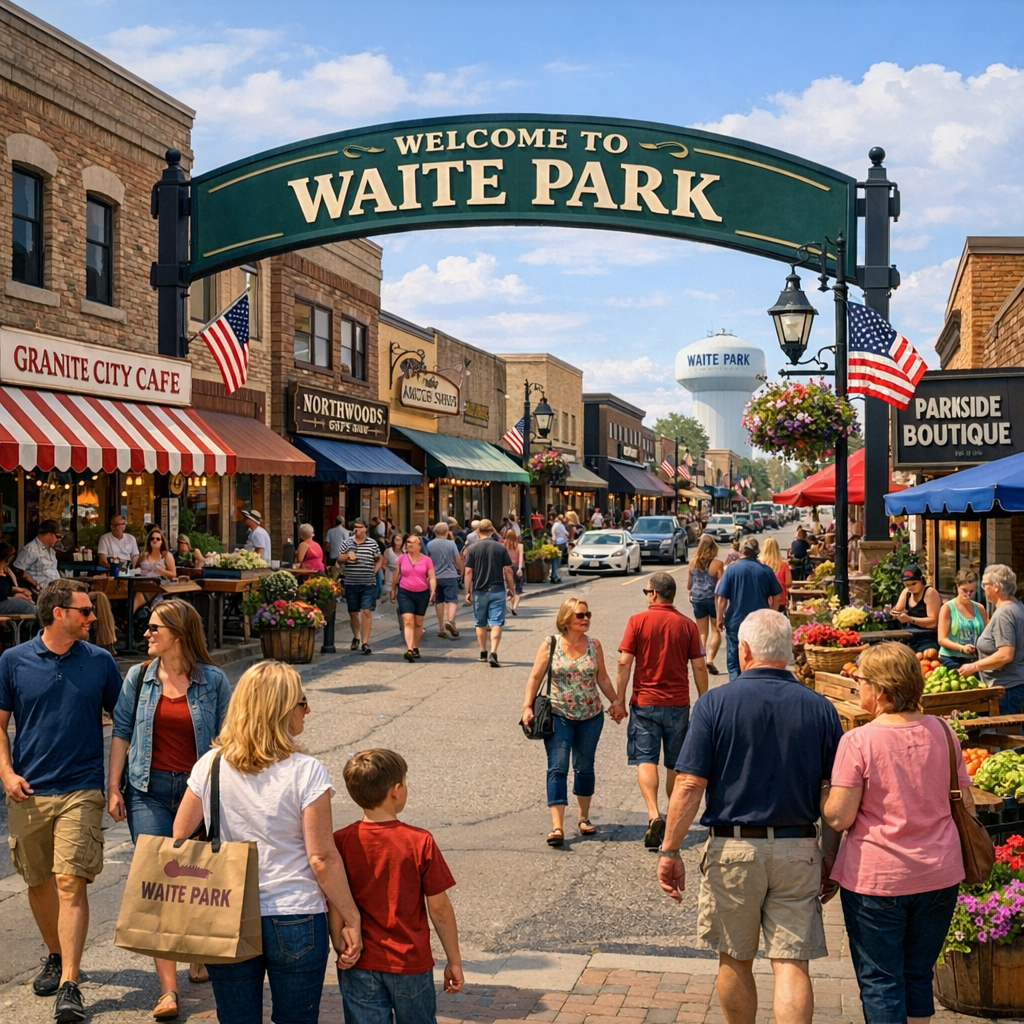
Waite Park, Minnesota, has experienced notable economic growth in recent years, positioning itself as a dynamic community within Stearns County. This article provides an overview of the city’s economic development, focusing on key industries, housing trends, and recent fiscal initiatives.
Economic Development and Key Industries
Waite Park’s strategic location near major transportation routes has fostered a diverse economic environment. The city is renowned for its robust retail sector, featuring a large shopping district that attracts visitors from the surrounding region. Additionally, healthcare, manufacturing, and educational services play significant roles in the local economy. The proximity to St. Cloud further enhances opportunities in technology and professional services sectors.
Housing Market Trends
The housing market in Waite Park reflects a community in transition. As of March 2026, the median listing price for homes was $289,000, marking a 3.23% increase over the past year. The median price per square foot stood at $159, a decrease of 14.97% from the previous year. Active listings have risen by 73.33%, indicating a growing inventory. Homes spent a median of 51 days on the market, a slight increase of 2% year-over-year, suggesting a balanced market for both buyers and sellers.
Fiscal Initiatives and Local Option Sales Tax
In recent years, Waite Park residents have approved local option sales tax referendums to fund essential community projects. In the November 2022 general election, voters approved an additional 0.5% sales tax effective April 1, 2023, to finance the construction and equipping of a new Public Safety Facility. Subsequently, in November 2024, a county-wide referendum introduced an additional 0.375% sales tax, effective April 1, 2025, to fully fund the construction of a new Stearns County Justice Center. These initiatives reflect the community’s commitment to enhancing public infrastructure and services.
Waite Park’s economic landscape showcases a community that balances growth with strategic planning. The city’s diverse industries, evolving housing market, and proactive fiscal measures contribute to its ongoing development and appeal as a place to live and work.