
My name is Michael Williams. I’ve lived in Waite Park long enough to see the canvas change: people planting roots, shops opening, discussions ringing at City Hall. Yet through every change—new faces in shops, more languages spoken, sidewalks stretched to reach parks—some things feel unshaken: a desire for safety, pride in green space, hope for a community where everyone belongs.
Growing Mosaic, Layer by Layer
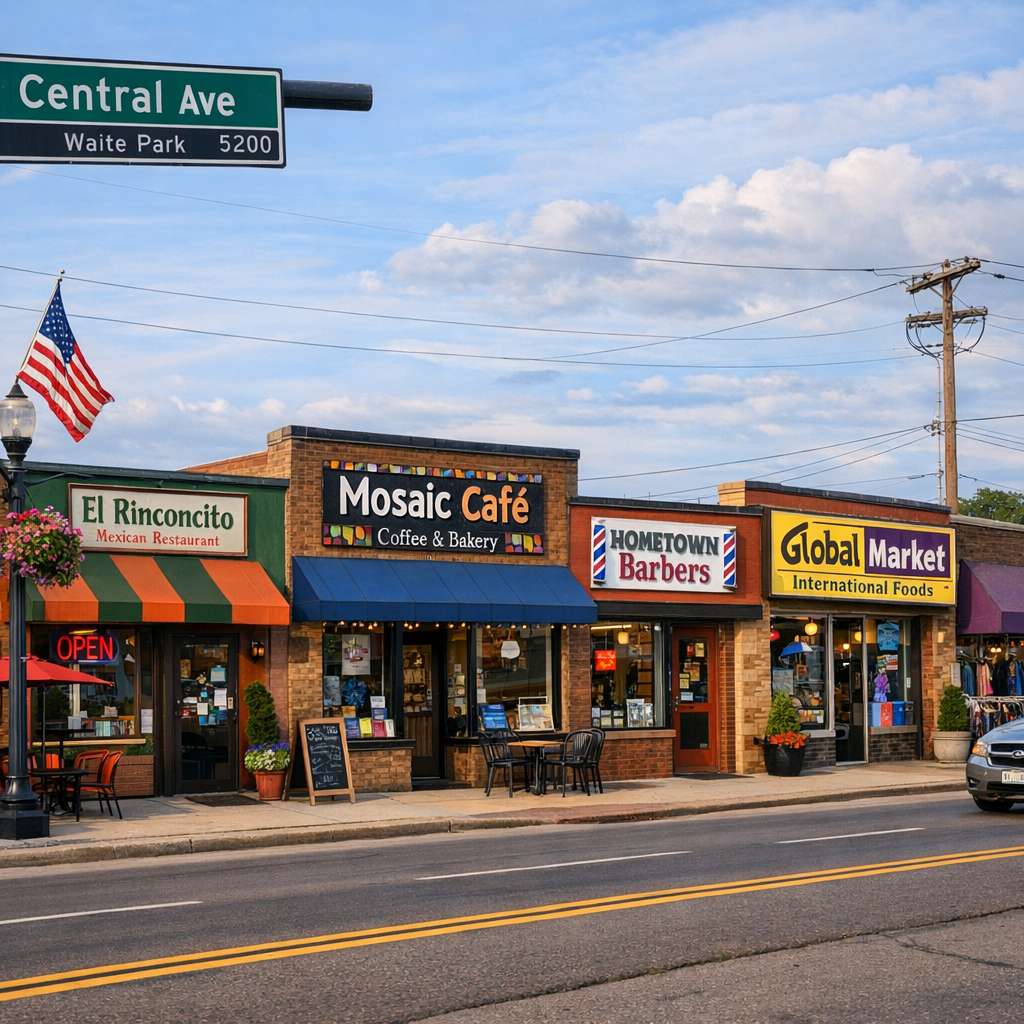
In parts of Northeast Minneapolis known as Waite Park, storefronts tell stories. A Somali family runs a restaurant beside a Polish deli, a Mexican bakery cosigns the block with old Eastern European roots. These aren’t just businesses—they’re markers of heritage, signals that new neighbors are arriving, contributing, building community. Despite differences in language and custom, these cultural layers generally overlap, not collide.
Still, the shifts bring concrete challenges. Immigrant families often take on fixing up houses—painting, lawn care—while newer owners moving in expect certain upkeep and efficiency. Differences in what “noise” means, or when day-to-day lines of activity feel respectful, sometimes spar across fences. Communication matters: local gatherings, neighborhood councils, even a shared meal do more than preserve peace; they build trust.
Keeping the Heart: Affordability and Identity
Waite Park’s appeal has long been its relative affordability—homes, rents, and the cost of filling a cart at a local shop felt manageable. That affordability has played a big role in making this neighborhood vibrant and diverse. But with increasing demand and spill-on effects from pricier areas nearby, what was once accessible is slowly feeling less so.
People I talk to fear losing the very thing they love: the charm of familiar faces at the corner store, the ability to stay despite a raise or a promotion. Many supporters of the city’s planning efforts want housing policies that improve existing stock and add more single-family options without sacrificing affordability.
Parks, Safety, and Building Belonging
I often hear neighbors say: the parks are why we stay. Green spaces, trails, open lawn, community centers—this is where kids play, neighbors meet, and belonging grows. But as usage increases—daily walkers, summer play, sports—the need for well-maintained sidewalks, safe crossings, lights, and accessible paths becomes more urgent.
Safety isn’t just about crime statistics—it’s about feeling safe walking home after dark, having confidence the neighborhood shares expectations for mutual respect, seeing enough street lighting, and knowing your voice matters when issues arise. Public input surveys confirm: folks care as much about “friendly,” “family,” and “safe” as they do about “vibrant.”
What’s Ahead? Shared Choices Matter
Growth and change aren’t inevitable problems—they’re opportunities. The choices made now—where housing goes, how to support local businesses, how to weave diverse voices into city decisions—will reverberate in years to come. Every new community member brings a story, every long-time resident brings sense of history; matching them in conversation, in planning, is our shared work.
I believe in this community: in its capacity to adapt without losing its soul. In Waite Park, we can have both rising hope and steadfast roots. If we stay curious, if we keep speaking up, if we insist on being inclusive—those are the threads that bind, the voices that build.