

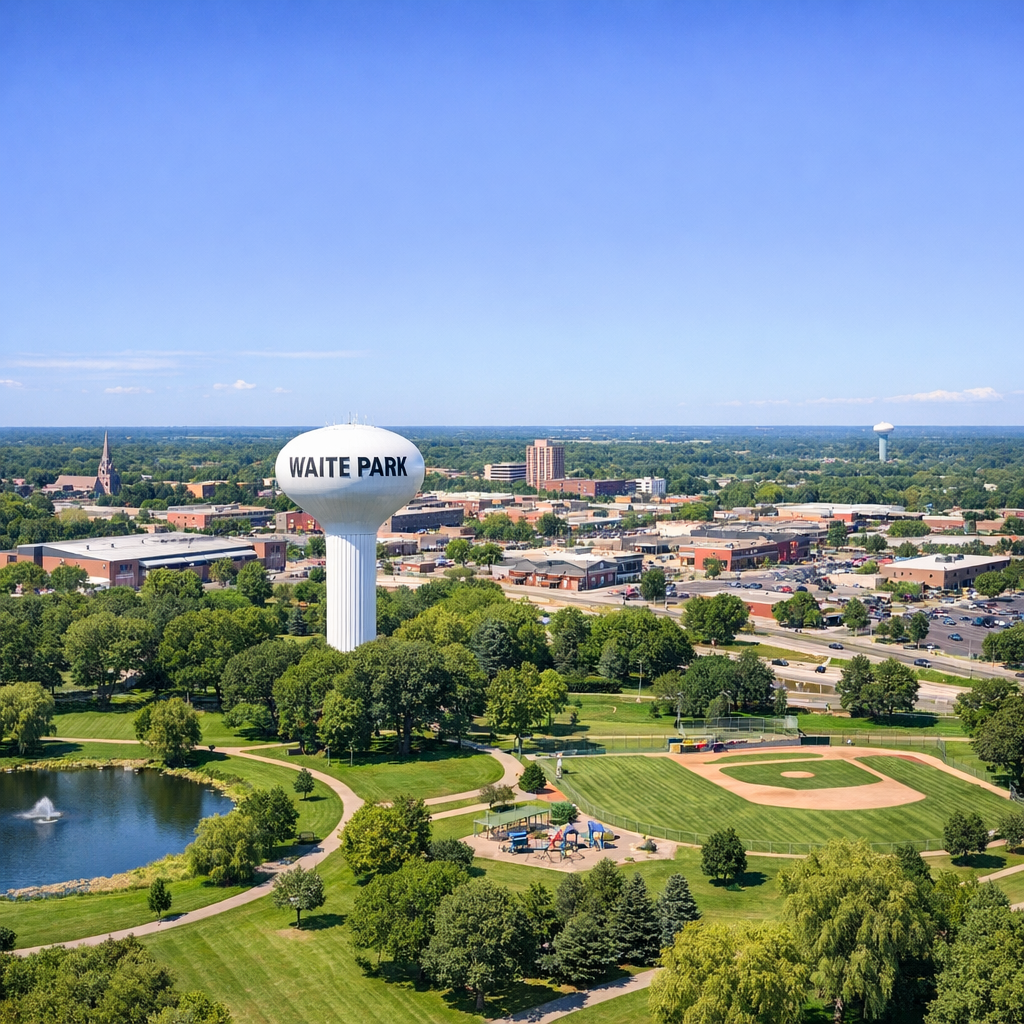
Waite Park, Minnesota, experiences a diverse climate characterized by warm, wet summers and cold, snowy winters. Throughout the year, temperatures typically range from 5°F to 82°F, with extremes being rare. The warm season spans from late May to mid-September, averaging daily highs above 70°F, while the cold season lasts from late November to early March, with average highs below 33°F.
Precipitation varies seasonally, with June being the wettest month, averaging 2.72 inches of rainfall over approximately 14 days. In contrast, January is the driest month, receiving about 0.35 inches of rainfall. Relative humidity is highest in January at 90% and lowest in April and May at 70%. Wind speeds peak in April, averaging 9.2 mph, and are calmest in August at 6.9 mph.
Beyond its climate, Waite Park is proactive in environmental stewardship, particularly concerning water quality. The city has implemented a Wellhead Protection Plan to safeguard its drinking water from potential contaminants. This plan involves monitoring and managing activities near water sources to prevent pollution.
Additionally, Waite Park addresses stormwater management through a dedicated utility. The city’s stormwater system directs runoff to the Sauk River, local basins, and the St. Cloud storm sewer system. To comply with environmental regulations, Waite Park enforces a Stormwater Pollution Prevention Program (SWPPP), which includes public education, illicit discharge detection, and construction site runoff controls.
Residents are encouraged to participate in pollution prevention efforts. Proper disposal of pet waste, minimizing the use of de-icing salts, and preventing illicit discharges into storm drains are vital actions that contribute to maintaining the health of local water bodies.
By understanding Waite Park’s climate and supporting its environmental initiatives, residents can play an active role in preserving the city’s natural resources for future generations.