

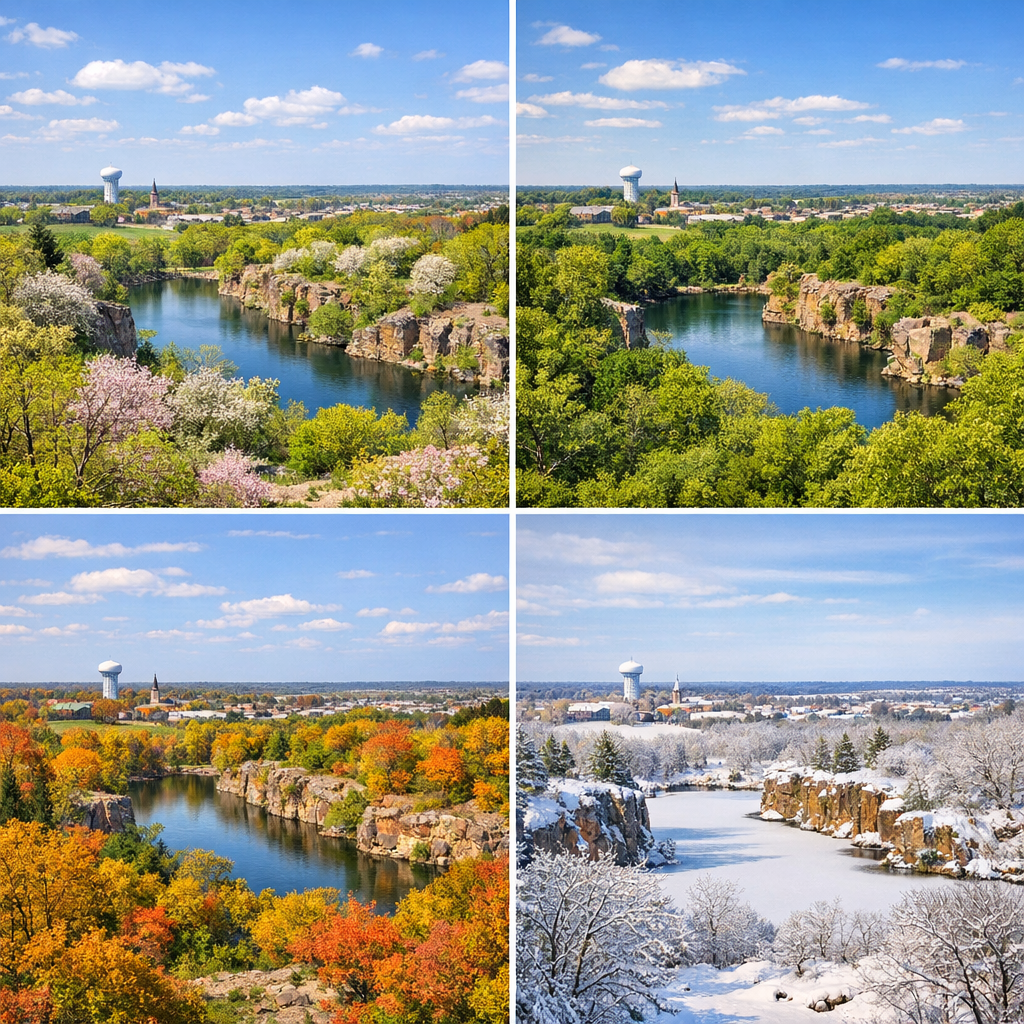
Waite Park, Minnesota, experiences a humid continental climate characterized by distinct seasonal variations. Summers are typically warm and wet, while winters are cold and snowy. Throughout the year, temperatures can range from lows of 5°F to highs of 82°F, with extremes rarely dipping below -17°F or exceeding 90°F. The warm season spans approximately from May 20 to September 17, with average daily high temperatures above 70°F, peaking in July with an average high of 81°F and a low of 60°F. Conversely, the cold season lasts from November 26 to March 4, featuring average daily highs below 33°F.
In response to environmental challenges, Waite Park has implemented several initiatives to safeguard its natural resources. Notably, the city has addressed concerns related to per- and polyfluoroalkyl substances (PFAS) detected in municipal wells. Voluntary testing revealed PFAS levels slightly exceeding the Health Risk Index of 1 as determined by the Minnesota Department of Health. While not in violation of current drinking water regulations, the city remains proactive in monitoring and managing these contaminants to ensure the safety of its drinking water.
Additionally, Waite Park has developed a Wellhead Protection Plan aimed at controlling potential contamination sources that could impact the city’s drinking water supply. This plan underscores the city’s commitment to maintaining a safe and adequate water supply for the community, aligning with state requirements and prioritizing public health.
Residents are encouraged to participate in pollution prevention efforts. The city provides resources on proper disposal of hazardous waste, pet waste management, and the responsible use of de-icing salts to minimize environmental impact. By engaging in these practices, the community contributes to the preservation of Waite Park’s natural environment and the health of its water resources.